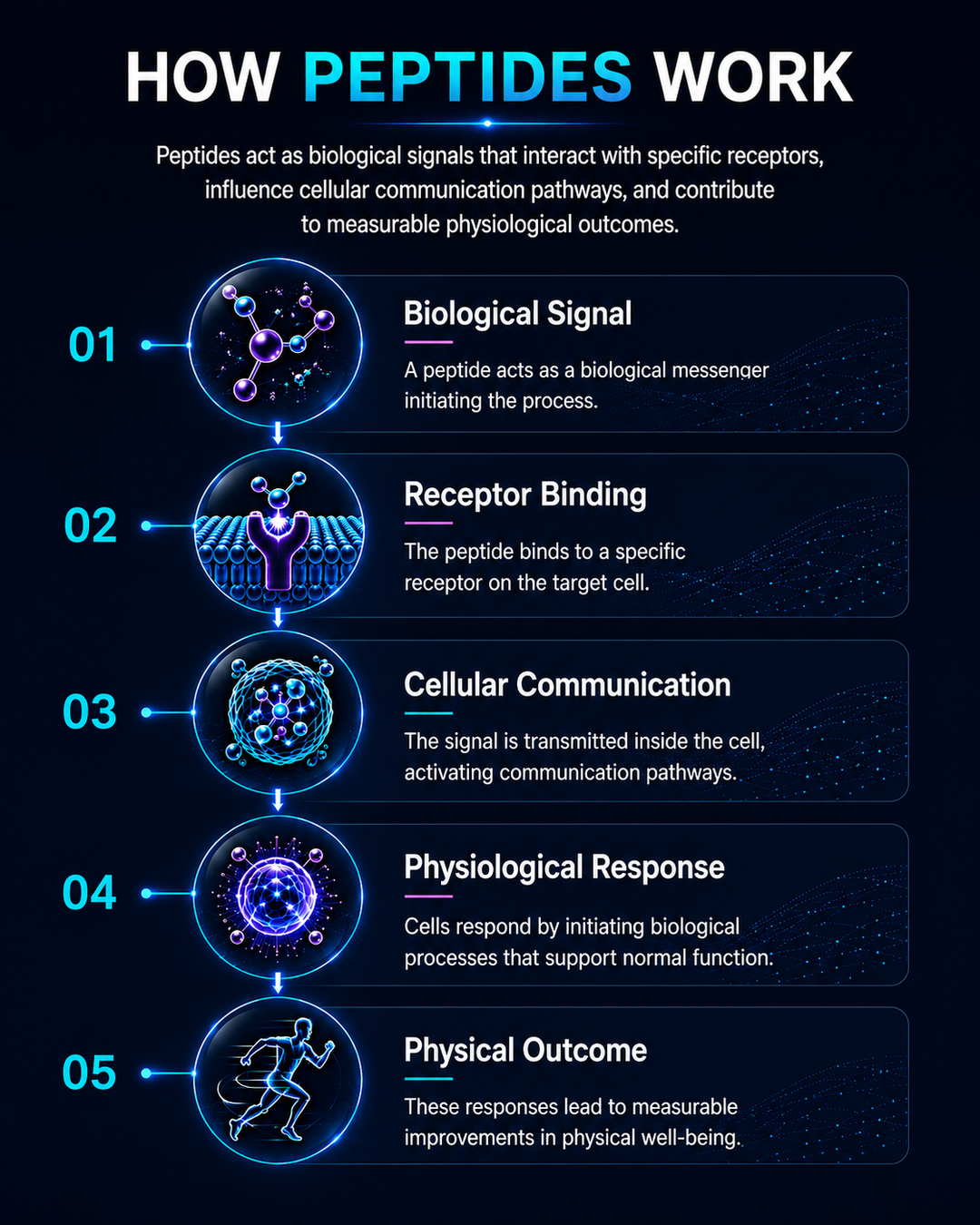


Biological pathways govern metabolism, regeneration, and systemic performance.
Understanding how these systems interact enables precise, targeted intervention at a systems level.

Regulation of energy balance, appetite signalling, and metabolic pathways.

Activation of cellular repair, tissue recovery, and structural restoration.

Coordination of intercellular communication and pathway activation.
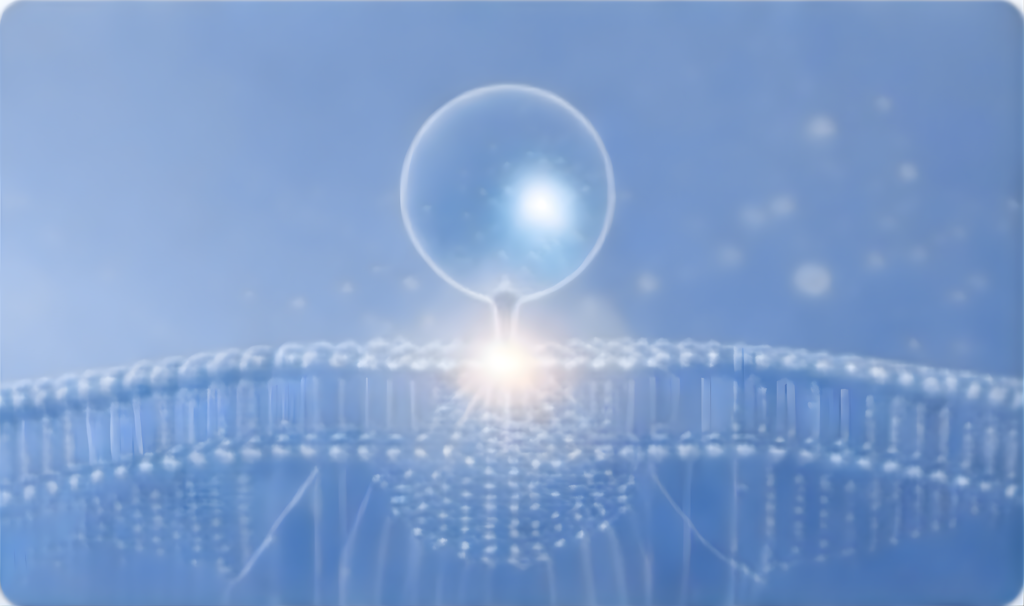
Peptide compounds interact with specific cellular receptors, initiating targeted signalling cascades that regulate biological activity at the cellular level. This is the first step in translating molecular interaction into measurable physiological response.
Once activated, signalling pathways influence core biological processes including metabolic regulation, tissue repair, and inflammation control. These pathways do not act independently, they operate within an interconnected system, amplifying and coordinating responses across multiple biological functions.
Biological effects occur across interconnected systems, producing coordinated outcomes in performance, recovery, metabolic function, and long-term physiological balance. These outcomes reflect the combined effect of pathway interaction rather than isolated biological activity.